
Are Outdoor Sockets Waterproof? What to Know
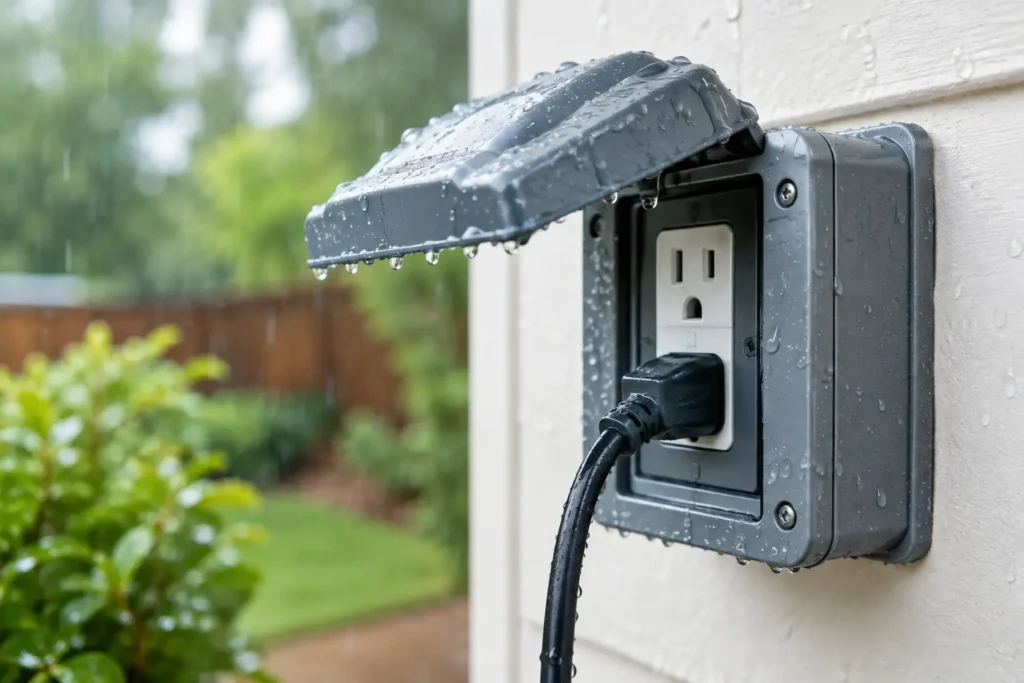
A socket beside the patio can make garden jobs, outdoor lighting and summer entertaining far more convenient. But are outdoor sockets waterproof? Not completely in every circumstance. A properly selected and professionally fitted outdoor socket is weatherproof when used as intended, but it still needs the right cover, location and installation to remain safe.
Are outdoor sockets waterproof when it rains?
Outdoor sockets are designed to resist rain and splashes, rather than being ordinary indoor sockets placed in a plastic box. Most have a hinged protective cover that seals around the front of the unit, helping to keep water and dirt away from the live electrical connections.
The key point is that the protection can change when the socket is in use. On some models, the cover provides its stated protection only when fully shut. If a plug is connected, the lid may be held open and rain can reach areas that were protected before. Better-quality outdoor units have a cover that closes around the cable while equipment is plugged in, making them a much safer choice for regular use outside.
No socket should be treated as indestructible. A damaged lid, split seal, loose fitting or cracked casing can allow moisture in, even if the socket was suitable when first installed. Water and electricity are never a combination to take chances with.
What the IP rating tells you
Outdoor electrical equipment is marked with an IP rating. IP means Ingress Protection, and the two numbers indicate how well the item resists solid objects and water. The higher the water-protection figure, the greater the level of resistance under the test conditions.
IP44 for sheltered outdoor positions
An IP44-rated socket is protected against splashing water from any direction. It may be appropriate for a sheltered location, such as beneath a substantial canopy, but the position still matters. A socket on an exposed wall that receives driving rain is likely to need a higher level of protection.
IP66 and similar ratings for more exposed areas
IP66 equipment offers stronger protection against dust and powerful water jets. This is often a sensible option for exposed gardens, driveways, workshops and commercial yards. It does not mean you can spray it directly with a pressure washer or assume it is suitable for being submerged.
The rating applies to the product in the condition described by its manufacturer. That is why the quality of the cover, cable entry and installation are just as important as the number printed on the front.
The socket is only one part of a safe installation
A weatherproof socket can still become unsafe if the cable route, connections or circuit protection are wrong. External cables need to be suitable for outdoor use and properly secured, with entries sealed to prevent water tracking into the enclosure. The socket should also be mounted firmly at a sensible height, away from areas where it is likely to be knocked by garden furniture, bins or equipment.
The circuit should have suitable RCD protection. An RCD is designed to disconnect the supply quickly if it detects an electrical fault, reducing the risk of serious electric shock. It is an essential extra layer of protection, but it does not make a wet, damaged or poorly fitted socket safe to use.
A qualified electrician will assess where the supply is coming from, whether the existing consumer unit provides the right protection and whether the circuit can safely handle the intended load. This matters if you plan to run a pond pump, hot tub, garden office, electric lawn equipment or outdoor heaters. These all have different demands, and an extension lead is rarely the right long-term answer.
Common mistakes to avoid outside
The most common problem is using an indoor extension lead outdoors for longer than a temporary task. Indoor leads, multi-way adaptors and trailing connections are not designed for rain, damp grass or repeated exposure to sunlight. They can become damaged without it being obvious.
Another issue is leaving a plug connected permanently with the cover unable to close properly. If the socket is being used for garden lights or a water feature, choose an enclosure designed to maintain protection with a plug inserted. Avoid routing leads across paths, lawns and doorways, where they can be cut, crushed or become a trip hazard.
It is also worth checking how the socket is used during garden cleaning. Never direct a hose or pressure washer at an outdoor socket, even if it has a high IP rating. Turn off and unplug connected equipment before cleaning nearby surfaces.
Signs your outdoor socket needs attention
A quick visual check can prevent a small defect becoming a dangerous fault. Look for a cover that no longer closes, perished rubber seals, cracks in the plastic, rusted screws, loose fixings or discolouration around the socket. If the socket trips the RCD, feels warm, makes a buzzing sound or shows signs of water inside, stop using it.
Do not remove the cover to investigate or attempt to dry it with a heater. Switch off the relevant circuit if it is safe to do so, keep people away from the area and arrange for an electrician to inspect it. Where there is an urgent electrical fault, prompt professional attention is the safest course of action.
When a new outdoor socket is worth fitting
A fixed socket is usually safer, neater and more practical than running a lead through a window or doorway. It can be positioned for the jobs you actually do, whether that is mowing the lawn, charging tools, powering festive lights or working in a shed.
For a garden office, workshop or regular outdoor entertaining area, it may be better to plan several sockets and lighting points together. This avoids overloading one outlet or relying on adaptors. A proper installation can also include suitable isolation, cable protection and testing so you know it is working as it should.
Homeowners, landlords and businesses across Kent should also consider the condition of older installations. A socket that was fitted years ago may not suit its current use, particularly if the garden has changed or higher-powered equipment has been added.
A sensible approach to outdoor power
Choose a socket with an IP rating that suits how exposed the location is, make sure its cover can protect it while in use, and have the installation carried out and tested properly. Eldred Electrical Services can advise on a tidy, safe arrangement for homes and premises in Tonbridge and the surrounding area.
Before the next spell of wet weather, take a moment to inspect any outdoor electrical accessories you already have. A secure cover and a sound installation offer far more reassurance than hoping a socket will cope with the rain.


