
Fuse Box Versus Circuit Breaker: What’s Safer?
A blown fuse at 9pm is more than an inconvenience when it has taken out the lights, cooker or heating controls. The question of fuse box versus circuit breaker usually comes up at that moment – particularly in older Kent homes where the electrical installation may have been added to over several decades.
Both systems are designed to protect cables and reduce the risk of electric shock or fire when a fault occurs. The difference is in how they respond, how easily they can be reset, and the level of additional protection they can provide. For most properties, a modern consumer unit with circuit breakers and RCD protection offers a clearer, safer and more practical arrangement. That does not automatically mean every older fuse box is dangerous or needs immediate replacement.
Fuse box versus circuit breaker: the main difference
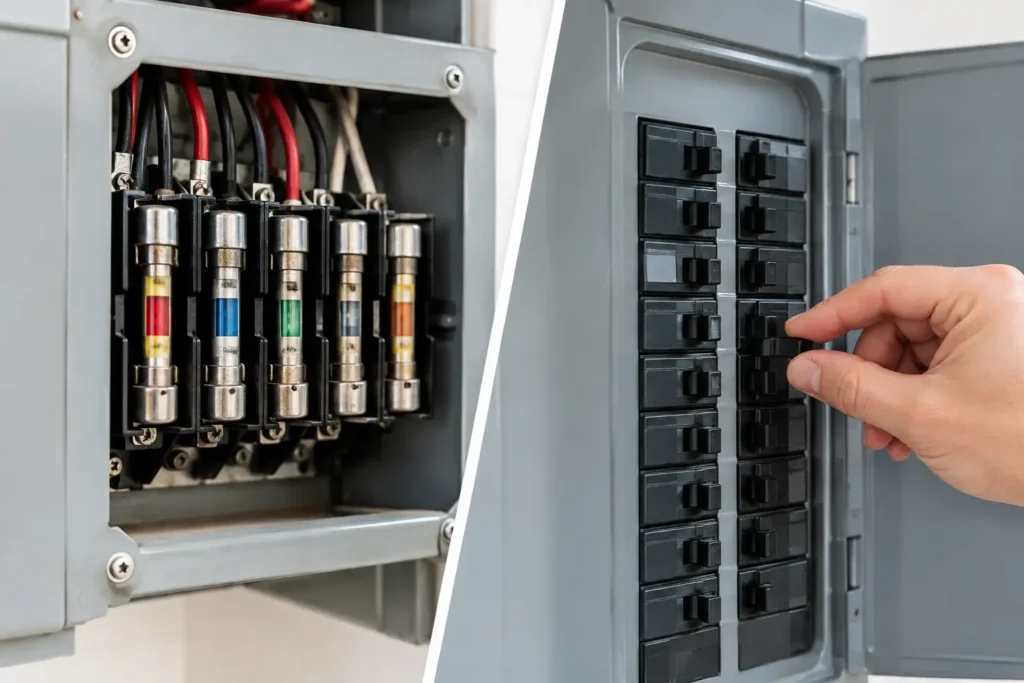
A traditional fuse box contains fuse wire or cartridge fuses. When too much current flows through a circuit – perhaps because of an overload, damaged cable or faulty appliance – the fuse melts and disconnects the supply. Once the underlying fault has been found and corrected, the fuse wire may need replacing before the circuit can be used again.
A circuit breaker does the same basic protective job, but mechanically. If it detects excess current, it trips to the off position. After a qualified electrician has identified and dealt with the cause, it can normally be reset without replacing any components.
In UK homes, the panel containing these devices is more accurately called a consumer unit. Many people still call it a fuse box, even when it contains modern breakers. There is nothing wrong with the everyday term, but knowing what is inside the unit helps when discussing a fault or arranging an inspection.
Why modern consumer units offer more protection
The key benefit of a modern consumer unit is not simply that a circuit breaker can be reset. It is the combination of protective devices it can contain.
A miniature circuit breaker, commonly called an MCB, protects a circuit from overloads and short circuits. For example, it may trip if too many high-demand appliances are used on one circuit, or if a cable fault causes current to rise sharply.
An RCD, or residual current device, provides a different kind of protection. It monitors the balance of electricity flowing through a circuit and can disconnect the supply quickly if it detects current leaking to earth. This can offer important additional protection against electric shock and certain fire risks.
Many newer consumer units use RCBOs. These combine the functions of an MCB and RCD for individual circuits. In practical terms, an RCBO can mean that a fault on the washing machine circuit does not also switch off lights or sockets elsewhere in the property. This is particularly useful in homes, rented properties and business premises where losing power to several circuits at once can cause unnecessary disruption.
Older rewireable fuse boxes may not have RCD protection at all. Some have an RCD added later, but the overall condition, earthing arrangement, circuit labelling and quality of previous alterations all need to be considered. Safety is about the complete installation, not just one component on the wall.
Does an old fuse box need replacing?
Not necessarily. Age alone is not a reliable diagnosis. A well-maintained older installation can sometimes remain serviceable, while a newer consumer unit may have issues if it has been poorly installed, damaged or altered without proper testing.
That said, replacement is often worth considering where the existing unit has old-style fuse wire, no RCD protection, visible damage, loose covers, signs of overheating or unclear circuit labels. It may also be sensible during a rewire, major extension, kitchen refurbishment or when a property is being prepared for new tenants.
Landlords have a particular reason to keep electrical safety under review. The installation must be inspected and tested at the required intervals, with any necessary remedial work completed. Homeowners and businesses also benefit from periodic inspection, especially where a property is older, has changed use, or has had extensive electrical work carried out over the years.
A consumer unit upgrade is not a simple swap-over job. Before fitting one, an electrician should assess the condition of the installation, including earthing and bonding arrangements, cable condition and the suitability of existing circuits. A new unit cannot correct unsafe wiring hidden in walls, lofts or under floors.
Warning signs that should not be ignored
A fuse blowing or a breaker tripping once can be caused by a straightforward appliance fault. Repeated tripping is different. It is the electrical system doing its job by disconnecting a circuit when it detects a problem.
Arrange a professional inspection if you notice any of the following:
- A breaker or RCD that will not reset, or trips again soon after resetting.
- A burning smell, buzzing sound, discolouration or warmth around the consumer unit.
- Lights flickering alongside other electrical faults, especially after recent building work.
- Fuse wire that has been replaced with the wrong rating, thick wire, foil or any other improvised material.
- Damaged covers, exposed parts, missing labels or a consumer unit in a damp or unsuitable location.
If there is smoke, sparking, a strong burning smell or signs of fire, keep clear of the unit if it is unsafe to approach, call the emergency services where required, and seek urgent electrical help. Do not repeatedly reset a tripped device in the hope that it will stay on. Doing so can mask a fault and place more stress on the circuit.
What causes a circuit breaker to trip?
The cause may be an overloaded circuit, a faulty appliance, damaged wiring, moisture ingress or a problem with a fixed item such as an oven, shower, immersion heater or outdoor light. RCD trips are often linked to earth leakage, which can be intermittent and difficult to trace without suitable test equipment.
You can make the fault-finding process easier without working on the electrical installation. Make a note of which switch has tripped, what was running at the time, and whether recent weather, building work or a new appliance coincided with the problem. If it is safe to do so, unplug portable appliances on the affected circuit before speaking to an electrician. Do not remove the cover of the consumer unit or alter fuse wire yourself.
For a single appliance that repeatedly trips the circuit, stop using it until it has been checked or replaced. If an essential circuit will not stay on, such as one serving refrigeration, heating controls or business equipment, prompt professional attention can limit disruption.
Choosing the right upgrade for your property
The best consumer unit is not simply the largest one available. It should be correctly specified for the property, the number and type of circuits, the earthing system and likely future use. A household planning an electric shower, induction hob, electric vehicle charger, garden office or extension may need capacity and circuit provision that an older unit does not offer.
For commercial premises, consideration also needs to be given to business continuity. Separating lighting, sockets, refrigeration, alarms, IT equipment or machinery onto suitable circuits can make a fault less disruptive. Inspection, testing and clear labelling matter just as much as the equipment itself.
A properly completed consumer unit replacement should include testing, certification and clear circuit identification. Neat installation is not just cosmetic: accessible, well-labelled protective devices make it easier to respond safely when a fault occurs.
When to call an electrician
A local electrician can inspect the consumer unit, test the relevant circuits and explain whether repair, investigation or replacement is the sensible next step. You should not feel pressured into an upgrade simply because the unit looks old. Equally, it is wise not to delay where testing identifies missing protection, overheating, damaged equipment or faults in the installation.
Eldred Electrical Services provides clear fault finding, consumer-unit-related support and electrical testing for homes and premises across Tonbridge and the surrounding Kent area. The aim should always be to identify the real issue, keep disruption to a minimum and leave you with a safe, understandable solution.
If your fuse box has become a source of worry rather than a quietly dependable part of the property, an inspection can replace guesswork with a clear picture of what needs attention.


