
Why Does Outdoor Lighting Fail? Common Causes
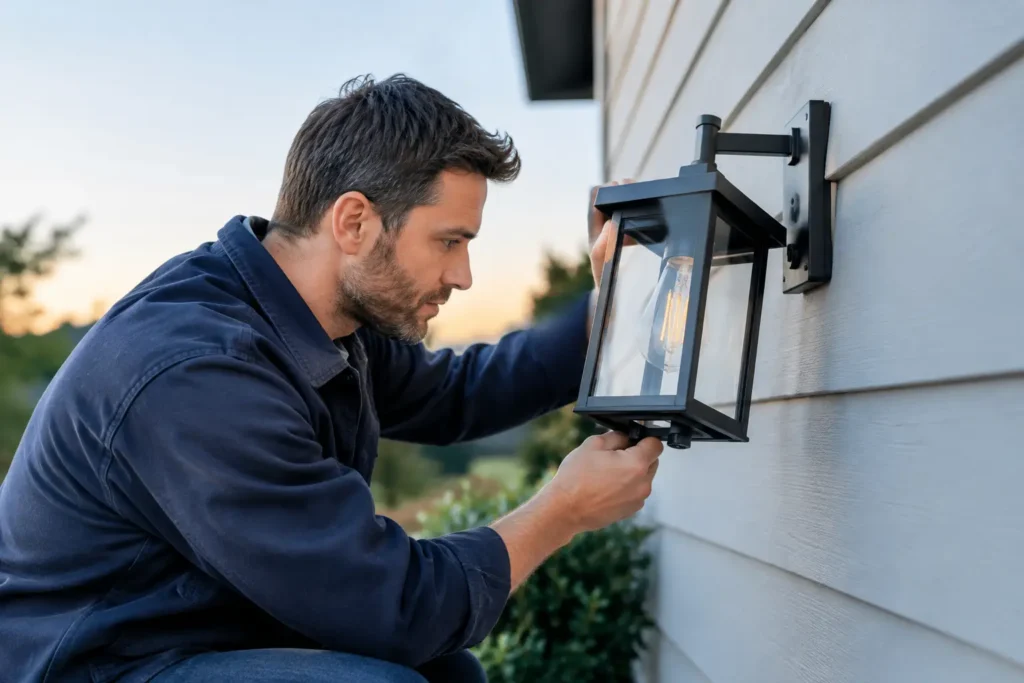
A porch light that works intermittently, pathway lights that go dark after rain, or a security light that stays on all night can quickly become more than an inconvenience. If you are asking, why does outdoor lighting fail, the answer is usually a combination of weather exposure, ageing components or an electrical fault that needs proper investigation.
Outdoor electrics work in tougher conditions than lighting indoors. They deal with rain, frost, heat, dirt, insects and accidental knocks, often for years at a time. A reliable installation should be designed for those conditions, but no fitting, cable or connection lasts forever without the right specification and occasional maintenance.
Why does outdoor lighting fail in British weather?
Water is the most common cause. Even a fitting labelled suitable for outdoor use can develop problems if its seals perish, its cover cracks, or water finds its way in through a poorly fitted cable entry. Once moisture reaches a connection, it can cause corrosion, short circuits and nuisance tripping at the consumer unit.
Kent weather brings plenty of wet days, but rain is not the only issue. Condensation can build up inside fittings after sharp temperature changes, particularly in enclosed wall lights and low-cost fittings. Frost can damage brittle plastic, while strong sunlight can eventually weaken seals and cable insulation. Garden lights close to the ground are especially vulnerable to mud, lawn treatments and standing water.
The fitting’s IP rating matters here. This rating indicates how well an electrical enclosure resists solid objects and moisture. The right level depends on where the light is fitted. A covered porch has very different requirements from a light beside a pond, on an exposed gatepost or set into a patio. Choosing a light because it looks right, without considering its location, is a common reason for early failure.
The usual causes of faulty exterior lights
A failed lamp or LED driver is often the simplest explanation. Traditional bulbs have a limited life, and LED fittings last longer but are not immune to failure. Many modern outdoor lights have integrated LEDs, meaning the light source cannot simply be changed. When the internal driver fails, the full fitting may need replacing.
Loose or corroded connections are another frequent issue. Cable joints in gardens need to be properly enclosed in suitable weatherproof boxes or resin joints. A connection wrapped in tape or left in a non-weatherproof enclosure may appear fine at first, then fail after months of damp conditions. Corrosion increases resistance in the connection, which can lead to flickering, dim output or complete loss of power.
Damage to underground cable is also worth considering. Spades, fence-post installations, landscaping work and rodents can all affect buried wiring. If one section of garden lighting stops working while another still operates, a damaged cable or joint may be to blame. This is not something to guess at or repair by digging blindly. The cable route and fault should be identified safely before work begins.
Other common causes include:
- a tripped RCD or circuit breaker caused by earth leakage
- a failed photocell, timer or motion sensor
- a worn external switch or isolator
- overloaded circuits or unsuitable connections added over time
- damage caused by vehicles, garden equipment or poorly secured cables
Motion sensors and photocells can cause confusing faults
Security lights are designed to respond to movement or changing light levels, so a problem with the controls can look like a problem with the light itself. A motion sensor may be aimed towards a road, moving branches or a busy footpath, causing the lamp to switch on repeatedly. A spider web or dirt across the sensor can also affect its operation.
Photocells can fail in a different way. If the sensor believes it is always dark, the light may remain on during daylight. If it believes it is always bright, the light may never switch on. Nearby lighting can confuse a photocell too. For example, a porch light shining directly onto the sensor may make a separate garden light switch itself off.
Before assuming the fitting has failed, check whether the sensor settings have been altered. Most security lights allow adjustment for sensitivity, daylight level and how long the lamp stays on. Small adjustments can solve the issue, but if the fitting is cracked, filling with water or causing the circuit to trip, it needs more than a settings change.
When a trip at the consumer unit points to a bigger problem
If outdoor lighting trips the RCD or circuit breaker, do not keep resetting it and hoping it will hold. An RCD is there to cut power when it detects an imbalance that could indicate current leaking to earth. Moisture in a fitting, damaged insulation or a faulty cable can all cause this.
It may be tempting to disconnect the obvious light and reset the circuit. However, an outdoor lighting circuit may supply several fittings, switches, sockets or outbuildings. The fault is not always where it first appears. Repeated resetting without diagnosis can mask the problem and may leave damaged equipment energised.
Turn the affected circuit off if it is safe to do so and arrange for a qualified electrician to investigate. This is particularly important if there is visible water in a fitting, a burning smell, discolouration, buzzing, damaged cable or signs of overheating. Keep people away from exposed wiring and do not touch electrical equipment while standing on wet ground.
Poor installation often shows up later
Some outdoor lighting faults are rooted in the original installation rather than the fitting itself. Exterior cables should be suitable for their environment, properly supported and protected from mechanical damage. Where cables pass through walls, enter a fitting or run underground, those points need particular care.
For garden lighting, shallowly buried cable, unsuitable connectors and inaccessible joints may save time at installation but create a difficult and expensive fault later. The same applies to lights added to an existing circuit without checking its condition or capacity. A neat installation is not just about appearance. It makes future testing, maintenance and repairs safer and more straightforward.
There is also a trade-off between cost and longevity. A budget wall light in a sheltered position may be perfectly reasonable, while the same fitting on an exposed boundary wall could fail quickly. Spending a little more on a suitable fitting and correct installation can reduce call-outs, replacement costs and dark areas around the property.
What you can check safely before calling an electrician
Start with the simple, non-invasive checks. Confirm that the relevant switch is on, look at the consumer unit for a tripped device, and check whether a timer or sensor setting has changed. If the fitting uses a replaceable lamp, only change it after isolating the supply and allowing it to cool. Use the correct type and wattage specified by the manufacturer.
You can also look for obvious external signs such as cracked covers, condensation, loose fittings, damaged cables or overgrown plants blocking a sensor. Do not remove covers, open junction boxes or attempt to dry out a fitting while it is connected to the supply. Outdoor electrical faults can be unpredictable, especially where water is involved.
For landlords and business owners, record when the fault occurs. Does it happen only after rain, at dusk, when a sensor activates, or when another appliance is in use? That information can help make fault finding quicker and more accurate.
Repair or replace the outdoor light?
It depends on the condition of the fitting and the cause of the fault. Replacing a lamp, sensor or weatherproof connection can be a sensible repair where the rest of the installation is sound. If the fitting is badly corroded, obsolete, repeatedly taking in water or not suited to its location, replacement is normally the better long-term option.
An electrician can test the circuit, inspect the connections and explain whether the issue is isolated to one fitting or part of a wider problem. Eldred Electrical Services provides clear fault finding and outdoor lighting work across Tonbridge and the surrounding Kent area, with safety and neat workmanship kept firmly in view.
A dark path, driveway or entrance is easier to put off than a kitchen fault, but good exterior lighting helps people see hazards, find their way home and feel secure after dark. If your lights are unreliable, especially if they are tripping the electrics or showing water damage, getting the cause checked promptly is the sensible next step.


