
PAT Testing Versus EICR: What Do You Need?
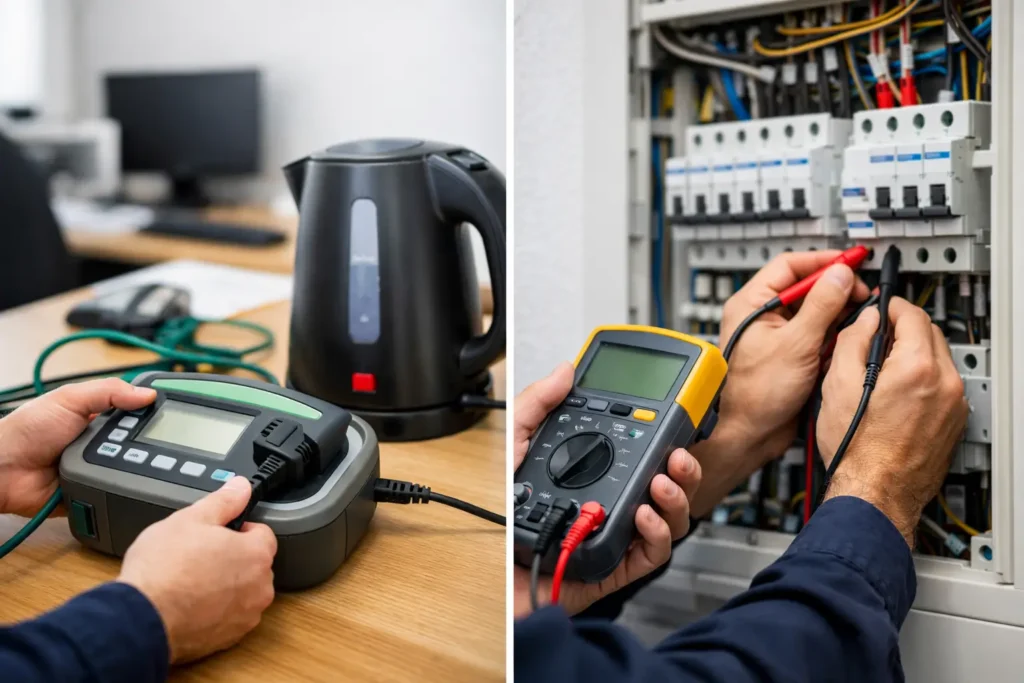
A failed kettle in a staff kitchen and ageing wiring behind a consumer unit are both electrical safety concerns, but they are not checked in the same way. That is where PAT testing versus EICR can become confusing for landlords, businesses and property managers. The two services serve different purposes, and arranging one does not normally mean you have covered the other.
The simple distinction is this: PAT testing looks at electrical appliances and their leads, while an EICR assesses the fixed electrical installation. Knowing which is needed helps you spend money in the right place and gives you a clearer picture of the safety of your property.
PAT testing versus EICR: the key difference
PAT stands for Portable Appliance Testing. Despite the name, it can apply to many items of electrical equipment that are plugged in or connected by a flexible lead, rather than only things that are easy to carry around. Think of computers, extension leads, kettles, heaters, printers, power tools, vacuum cleaners and kitchen appliances.
An Electrical Installation Condition Report, or EICR, is concerned with the permanent parts of an electrical system. This includes the consumer unit, circuits, sockets, light fittings, switches, cabling, earthing and bonding. It identifies whether the installation has deteriorated, has faults, or no longer meets an acceptable safety standard.
A useful way to remember it is that PAT testing examines what you plug in, while an EICR examines what those items plug into.
Neither test is a substitute for the other. A satisfactory EICR does not show that a damaged extension lead or faulty microwave is safe. Equally, a pass label on every office appliance does not confirm that the socket circuits, protective devices and fixed wiring are in good condition.
What happens during PAT testing?
PAT testing starts with a close visual inspection. This is often where obvious problems are found: cracked plugs, damaged cables, loose connections, signs of overheating, unsuitable extension leads or equipment used in the wrong environment.
Where appropriate, the appliance is then tested with specialist equipment. Depending on the item and its construction, this may include earth continuity, insulation resistance and polarity checks. The appliance is recorded as passed or failed, and a failed item should be removed from use until it has been repaired or replaced.
It is worth remembering that not every appliance needs exactly the same test. Some modern double-insulated equipment does not have an earth connection, for example. A competent inspection considers the type of equipment, how it is used and the environment it is used in, rather than treating every item as identical.
For a small office, PAT testing may cover staff equipment, cleaning appliances, kitchen items and extension leads. In a workshop, it could include more heavily used power tools and equipment that is exposed to greater wear. A simple visual check may be appropriate for some low-risk items, while a building site or busy commercial kitchen may justify more frequent formal testing.
What does an EICR inspect?
An EICR is a more detailed inspection and testing process. The electrician will assess the condition of the fixed installation and carry out tests that cannot be done by simply looking at the consumer unit or sockets.
This may reveal issues such as damaged or deteriorated wiring, missing earthing, overloaded circuits, incorrect connections, inadequate protection against electric shock, unsuitable consumer unit components or signs of overheating. The report also considers whether the installation is suitable for its present use.
Some testing can require circuits to be isolated, so there may be a period when parts of a property are without power. For homes and smaller premises, this can often be planned to keep disruption manageable. In occupied commercial buildings, an electrician can discuss the best time to carry out the work and whether testing should be phased around normal operations.
The report records observations using recognised classification codes. C1 means danger is present and urgent action is required. C2 identifies a potentially dangerous condition that needs remedial work. FI means further investigation is required without delay. C3 is an improvement recommendation and does not, on its own, make the report unsatisfactory.
If C1, C2 or FI observations are recorded, the EICR will be unsatisfactory until the appropriate issues have been dealt with or investigated. Clear explanations matter here. A report should help you understand what needs attention now, what can be planned, and why.
When is an EICR needed?
For landlords in England, an EICR is required at least every five years for rented homes, unless the report recommends a shorter interval. A copy must also be provided to tenants and supplied to the local authority if requested. New tenancies and changes in occupancy can create additional timescales, so it is sensible not to leave renewal arrangements until the last minute.
Homeowners are not generally under the same five-year legal requirement, but a periodic inspection is still sensible. It is particularly worthwhile when buying an older property, planning major alterations, noticing recurring tripping, or if the wiring has not been inspected for many years. Electrical installations can appear to work normally while hidden defects develop over time.
For commercial and industrial premises, the appropriate EICR interval depends on the type of property, its use and the risk level. An office and a workshop do not experience the same level of wear. Insurance requirements, lease terms, staff safety responsibilities and the condition of the existing installation should all be considered.
Is PAT testing a legal requirement?
There is no single rule that says every appliance must receive PAT testing every year. The law requires employers, landlords and duty holders to maintain electrical equipment so that it is safe to use. PAT testing is one practical method of meeting that responsibility, alongside regular visual checks, sensible records and prompt removal of damaged items.
The right frequency depends on risk. Equipment that is rarely moved in a low-risk office may need less frequent formal testing than a lead used every day in a busy retail space, school, workshop or construction environment. An appliance used outdoors, near water or in a shared kitchen also needs closer attention.
Landlords should not assume that an EICR covers tenant-use appliances they provide. If a furnished property includes a washing machine, fridge, lamps or other electrical equipment, those items should be maintained in a safe condition. PAT testing can provide a useful record, but the broader duty is to ensure the equipment remains safe between inspections too.
Situations where you may need both
Many properties benefit from both services because they contain both fixed wiring and supplied appliances. A landlord with a furnished flat, for example, may need an in-date EICR for the installation and a sensible testing or inspection regime for appliances supplied with the tenancy.
A small business may have a sound consumer unit and compliant socket circuits but still have worn extension leads under desks, damaged chargers or a portable heater with an overheating plug. Conversely, every appliance might pass inspection while sockets are loose or an older circuit lacks suitable protection.
There is also a grey area around fixed appliances. An EICR checks the circuit supplying a hard-wired shower, extractor fan or cooker connection point, but it is not a full service inspection of the appliance itself. If the appliance is faulty, separate diagnosis or manufacturer-specific servicing may be needed.
Choosing the right next step
If your concern is a particular plugged-in item, damaged lead, staff equipment or supplied appliances in a rental property, ask about PAT testing or an appliance safety inspection. If you are concerned about the age or safety of the wiring, are due a landlord report, have repeated tripping, or need evidence of the condition of a whole installation, an EICR is the correct starting point.
Do not rely on labels alone. A PAT label only reflects the date and result of that inspection, and an EICR reflects the installation condition on the day it was tested. Day-to-day checks still matter. Stop using equipment with damaged cables, scorch marks, loose plugs or an unusual smell, and arrange for it to be assessed.
For property owners and businesses across Kent, Eldred Electrical Services can explain what testing is appropriate for the building and the equipment you have, without making the process more complicated than it needs to be. A clear inspection plan is far more useful than paying for a test that does not address the actual risk.
If something does not look, sound or smell right electrically, treat that as a reason to act rather than something to monitor. A timely inspection can turn an uncertain safety concern into a straightforward repair plan.


