
Electrical Repair or Replacement: When to Act
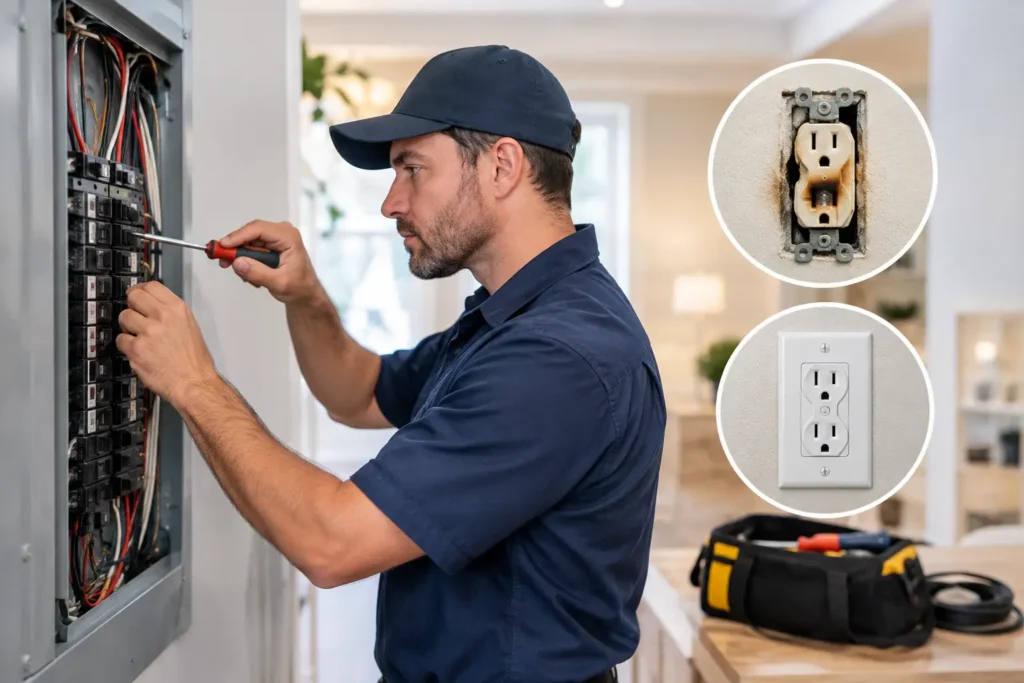
A tripping circuit, a warm socket or lights that flicker at random can quickly turn from an inconvenience into a concern. Electrical repair replacement is not always a straightforward choice: some faults can be corrected safely with a targeted repair, while others are a warning that an older component, circuit or installation has reached the end of its useful life.
For homeowners, landlords and businesses, the right decision starts with proper fault finding. Replacing parts unnecessarily can cost more than needed, but repeatedly repairing equipment that is worn, damaged or no longer suitable can create a bigger problem later. A qualified electrician can identify the cause, explain the options clearly and carry out the work with safety at the centre of every decision.
When an Electrical Repair May Be Enough
Many electrical issues have a specific, repairable cause. A loose connection, damaged accessory, faulty light fitting or failed switch may be isolated and put right without replacing a whole circuit. This is often the sensible option where the rest of the installation is in good condition and the fault has not caused wider damage.
For example, a socket that has stopped working may be affected by a loose terminal, a damaged cable connection or a fault elsewhere on the ring circuit. A bathroom extractor fan may simply need a replacement timer, isolator or fan unit rather than any major alteration to the wiring. Likewise, a cooker connection problem may be resolved by repairing the connection point or replacing a worn control switch.
A repair should never mean a temporary patch over a safety issue. The work needs to address the reason the fault happened in the first place. If a cable has overheated because a circuit is overloaded, fitting a new socket alone will not resolve the underlying issue. The circuit must be assessed to make sure it is suitable for the way the property is now being used.
Signs That Replacement Is the Safer Choice
Replacement becomes the better option when electrical equipment is damaged beyond safe repair, has failed repeatedly or no longer meets the demands placed on it. Older installations can continue to work for years, but working is not the same as being safe or suitable.
Warning signs worth acting on include:
- A consumer unit that trips frequently, has outdated protection or shows signs of heat damage.
- Sockets, switches or light fittings that feel hot, crackle, smell burnt or have visible discolouration.
- Cables with damaged insulation, exposed wiring or signs of previous poor-quality alterations.
- Circuits that cannot safely support newer appliances, electric showers, kitchen equipment or office machinery.
- Repeated faults in the same area, even after earlier repairs.
A consumer unit is a common example. If the enclosure and protective devices are in sound condition, a fault may relate to one circuit or a single appliance. However, an older fuse box with limited protection, deterioration or no capacity for additional circuits may need replacement. A modern consumer unit can provide improved protection, but it must be selected and installed following a full assessment of the existing installation.
Partial rewiring may also be appropriate where an extension, kitchen renovation or loft conversion has introduced new electrical requirements. In some properties, the original wiring is old or unsuitable in one area while the rest remains serviceable. It depends on the condition of the cables, the age and type of the wiring, the earthing arrangements and the results of testing.
Electrical Repair Replacement Starts With Fault Finding
It is tempting to assume that a tripping circuit means the consumer unit is faulty, or that a failed light means the fitting needs replacing. In practice, electrical faults can have several causes. Moisture in an outside fitting, a damaged appliance lead, a deteriorating cable or an overloaded extension lead can all produce similar symptoms.
Proper fault finding involves testing rather than guessing. An electrician will inspect the relevant circuit, identify where the issue is occurring and determine whether the fault lies in the fixed wiring, an accessory, a light fitting or an appliance. This approach avoids unnecessary replacement and gives you a clear basis for deciding what work is needed.
For landlords and property managers, this is particularly useful. A recurring issue in a rented property can be frustrating for tenants and costly if handled as a series of call-outs without identifying the source. Finding and correcting the actual fault helps protect occupants, reduces disruption and provides a more reliable long-term result.
Do Not Ignore These Urgent Electrical Problems
Some faults need prompt attention rather than a wait-and-see approach. If there is a burning smell, visible smoke, sparking, a buzzing consumer unit, electric shocks or repeated tripping that affects essential power, stop using the affected equipment where it is safe to do so. Do not remove consumer unit covers or attempt to repair wiring yourself.
If water has reached electrical equipment, such as a bathroom fitting, outside socket or garage circuit, the risk can be less obvious. Water and electricity are a dangerous combination, and the circuit may need to be isolated and inspected before it is used again. This is also true after a leak, flood or storm damage.
A loss of power can have different causes, from a local circuit fault to an issue with the electricity supply. Check whether neighbouring properties are affected before arranging work, but do not keep resetting a circuit breaker if it immediately trips again. A protective device is doing its job by responding to a fault. Repeated resetting can put damaged wiring or equipment under further stress.
Eldred Electrical Services provides responsive electrical support across Tonbridge and the surrounding Kent area, including emergency call-outs for faults that cannot safely wait.
Repair, Replace or Upgrade? Consider the Whole Property
The lowest initial price is not always the best value. Replacing one failed fitting may be entirely sensible, while changing several worn fittings at the same time can reduce future disruption and give a more consistent result. The right approach depends on the age, condition and intended use of the property.
A homeowner planning a new kitchen may benefit from additional sockets, dedicated circuits and suitable lighting while the room is already being refurbished. Repairing an old socket arrangement only to find it is inadequate once new appliances are fitted can mean avoidable extra work. Similarly, a business may need replacement equipment not just because of a fault, but because its current installation no longer supports safe day-to-day operation.
For commercial and industrial premises, downtime matters. A small fault can interrupt lighting, heating controls, IT equipment, production machinery or essential safety systems. Planned replacement can therefore be preferable to waiting for repeated failures, especially where equipment is ageing or the premises are changing use. Testing and inspection can help identify concerns before they become an emergency.
There is also a balance between appearance and safety. Old accessories with yellowed faces or loose switches may look tired, but replacement should be based on their condition and testing, not appearance alone. Equally, a neat new fitting should never be used to hide poor connections or unsuitable wiring behind it.
What to Expect From a Professional Electrician
Clear communication makes electrical work far less stressful. Before any significant repair or replacement, you should understand what has been found, what options are available and why one route is recommended. A fair quotation should set out the expected work, while recognising that some faults can only be fully confirmed once testing has begun.
Good workmanship also matters after the job is complete. Electrical accessories should be fitted neatly, cables protected appropriately and the work area left tidy. Where certification is required, this should be handled properly. For landlords, businesses and homeowners undertaking improvements, keeping records of electrical work can be valuable for future maintenance, sales, tenancy matters and peace of mind.
If a repair is the sensible route, it should restore safe and reliable operation without unnecessary work. If replacement is recommended, you should be able to see the reason for it and the benefit it brings – whether that is improved protection, dependable performance, more capacity or a safer installation.
A small electrical fault rarely improves by being ignored. Arranging an inspection early can often keep a simple repair simple, protect your property and give you confidence that the power you rely on is being looked after properly.


