
Top Causes of Socket Failure in Your Home
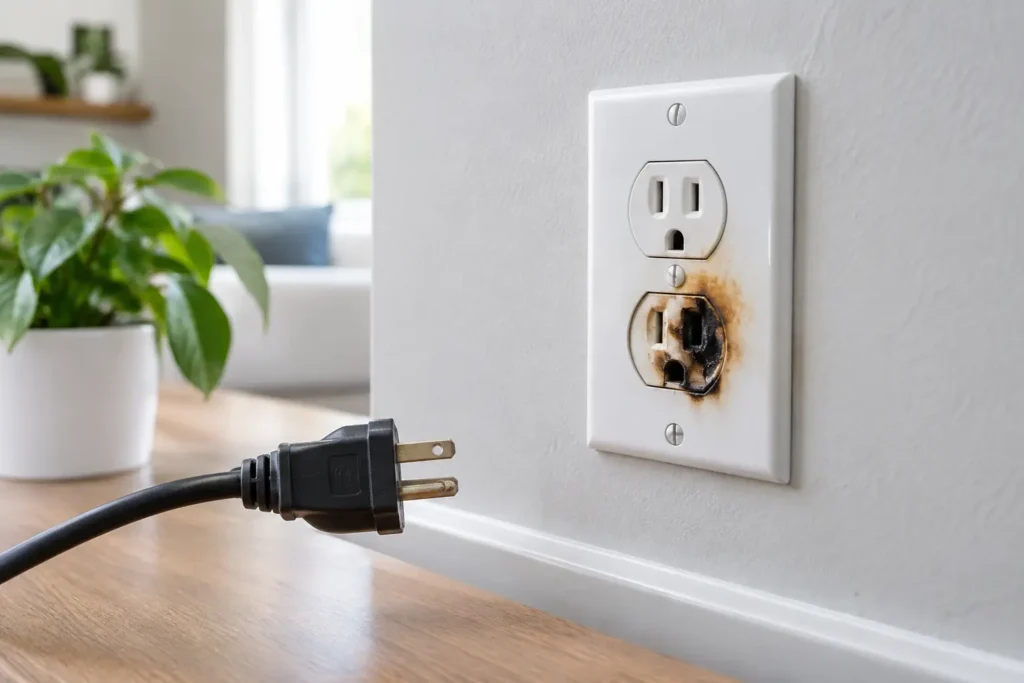
A socket that suddenly stops working can be more than an inconvenience, particularly when it powers a fridge, boiler controls, home office or essential equipment at a business premises. The top causes of socket failure range from a simple tripped circuit to damaged wiring hidden behind a wall. The key is knowing when a safe check is reasonable and when the fault needs a qualified electrician.
Do not keep using a socket that feels warm, looks discoloured, crackles, smells of burning or gives you an electric shock. Switch off the relevant circuit at the consumer unit if it is safe to do so, and arrange professional help. These symptoms can point to overheating or a loose connection, both of which need prompt attention.
Top causes of socket failure
A tripped circuit breaker or RCD
A circuit breaker or RCD at the consumer unit may trip when it detects an overload, a fault or current leaking to earth. When this happens, several sockets may stop working at once, often in the same room or area of the property.
Before assuming the socket itself has failed, unplug appliances on the affected circuit and check the consumer unit. If a switch has tripped, it can usually be reset once. If it trips again straight away, leave it off. Repeated tripping is a useful warning that there may be a faulty appliance, damaged cable, water ingress or an issue within the fixed wiring.
It is tempting to reset a breaker repeatedly to get the power back. That can hide the problem rather than solve it. An electrician can test the circuit and identify whether the issue lies with an appliance, the socket circuit or the consumer unit.
A loose or burnt connection
Sockets carry electrical current through terminals behind the faceplate. Over time, a connection can loosen due to age, movement, poor previous installation or repeated use of a plug. A loose connection creates resistance, and resistance creates heat.
Early signs may include an intermittent supply, a plug that only works in one position, a faint buzzing sound or a warm faceplate. In more serious cases, the plastic may brown or melt around the socket. The socket should not be used until it has been inspected and repaired safely.
Replacing a visibly damaged faceplate alone is not always enough. The cable and connections behind it must be checked for heat damage, and the cause of the overheating needs to be addressed.
Overloading and unsuitable extension leads
Most modern socket circuits are designed to cope with everyday household use, but a single outlet can still be overloaded. This commonly happens when high-demand appliances such as heaters, kettles, air fryers, tumble dryers or power tools are run from extension leads or multi-way adaptors.
An extension lead does not increase the amount of power available from the socket. It only gives you more places to plug in. Daisy-chaining extension leads, using damaged adaptors or placing leads under rugs can increase the risk of overheating and cable damage.
For kitchens, utility rooms, workshops and commercial spaces, the better long-term answer is often additional fixed sockets installed in the right locations. This reduces reliance on adaptors and makes the installation safer and more practical.
A faulty plug or appliance
Sometimes the socket is not the source of the fault. A damaged appliance lead, loose plug wiring or internal appliance fault can cause the circuit to trip or make a particular socket appear unreliable.
A useful clue is whether other appliances work from the same socket and whether the suspected appliance works elsewhere. Do not use this as a reason to keep experimenting with a device that has caused burning smells, shocks or repeated tripping. Unplug it and have the appliance or electrical installation checked.
Landlords and business owners should be particularly mindful of portable appliances supplied for tenants, staff or customers. Regular visual checks and appropriate testing help to identify worn leads, damaged plugs and unsafe equipment before they cause a disruption.
Damaged cables in walls or under floors
Cables can be damaged by drilling, nailing, alterations to a property, rodents, water leaks or movement in older buildings. The fault may develop immediately, or it may only become apparent later as the cable deteriorates.
A socket that stops working after shelves, pictures, kitchen units or other fittings have been installed deserves careful investigation. Never drill blindly near sockets or switches. Cables often run vertically or horizontally from electrical accessories, although installations vary and older properties can contain unexpected wiring routes.
Finding a damaged cable is a job for proper testing equipment and safe isolation procedures. Depending on the location and condition of the cable, a repair may be possible, or part of the circuit may need replacing.
Moisture and water ingress
Water and electricity are a dangerous combination. Leaks from plumbing, overflowing gutters, condensation, flooding or damp external walls can affect sockets, wiring and accessories. Bathrooms, kitchens, garages, outbuildings and outdoor areas need particular care because moisture is more likely to be present.
A socket near a leak should be treated seriously even if it still appears to work. Moisture can cause corrosion and insulation breakdown over time. In some cases, it may trip the RCD intermittently, especially during wet weather.
Outdoor sockets must be suitable for their location and correctly installed with appropriate protection. If an exterior socket or garden-lighting circuit is causing problems after rain, avoid using it until it has been checked.
Ageing wiring and poor previous work
Older properties across Kent can have wiring that has been altered several times over the years. A socket fault may reveal brittle cable insulation, outdated accessories, inadequate circuit capacity or connections that were not made correctly during previous work.
This does not automatically mean a full rewire is required. The right solution depends on the condition of the installation, test results, the age of the wiring and planned changes to the property. A targeted repair or partial rewire can sometimes be the sensible option. Where wiring is broadly deteriorated or no longer suitable for modern use, more extensive work may be safer and better value in the long run.
When a failed socket needs urgent attention
Turn off the affected circuit and seek urgent help if you notice a burning smell, scorch marks, smoke, sparking, melted plastic, tingling or shocks from an accessory. The same applies if the socket is loose on the wall, water has entered the area, or the circuit will not stay on after appliances have been unplugged.
For a business, a socket fault can affect equipment, lighting, refrigeration, IT systems or safe operation of the premises. Temporary workarounds with multiple extension leads can create further hazards, so it is worth getting the fault diagnosed properly rather than simply moving plugs around.
Safe checks you can make before calling
You do not need to remove a socket faceplate or touch any wiring to gather useful information. Check whether nearby sockets have also lost power, whether the relevant breaker or RCD has tripped, and whether the issue began after using a particular appliance. Make a note of any sounds, smells, heat or visible damage.
If a plug fuse has blown, replacing it with the correct rating may resolve an appliance plug issue, but only if there are no signs of damage and the appliance is otherwise in good condition. Never fit a higher-rated fuse to stop it blowing. If it blows again, the appliance needs attention.
For homeowners, landlords and local businesses, clear information helps an electrician find the fault efficiently. At Eldred Electrical Services, faults are explained in straightforward terms, with the work needed made clear before repairs go ahead.
A failed socket is often a small repair, but the warning signs around it should never be ignored. Acting early can prevent a damaged accessory or loose connection becoming a larger safety issue, and gives you confidence that the power you rely on is safe to use.


