
Can Electricians Install Extractor Fans Safely?
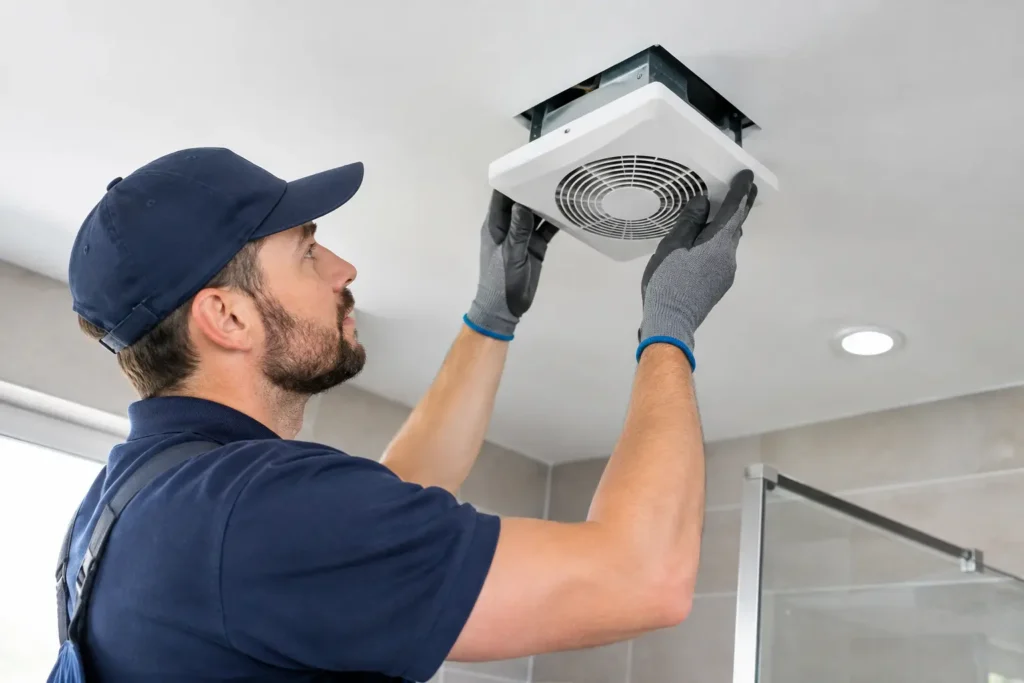
A bathroom fan that barely clears steam, rattles through the night or stops with the light can quickly become more than a minor annoyance. Persistent condensation encourages mould, damages paintwork and can affect timber, ceilings and fittings. So, can electricians install extractor fans? In most cases, yes. A qualified electrician is well placed to install, replace and test the electrical side of an extractor fan safely, particularly in bathrooms, kitchens and utility rooms.
The exact scope of the job depends on the fan type, where it is being fitted and whether new ducting, a new electrical supply or external venting is required. A good electrician will explain what is involved before work begins, rather than treating every fan replacement as the same job.
Can electricians install extractor fans?
Electricians regularly install extractor fans because they involve fixed wiring, suitable isolation, safe connections and testing. This is especially relevant in a bathroom, where electricity, moisture and restricted installation zones must all be considered carefully.
For a straightforward replacement, an electrician can usually remove the old fan, check the existing wiring, fit a suitable new unit and test that it operates correctly. They can also replace a noisy fan with a quieter model, add or set up a timer, or fit a humidistat fan that switches on automatically when moisture levels rise.
For a new installation, the work may include providing a fused connection unit, running a cable from an appropriate circuit, fitting an isolator, connecting the fan to the lighting circuit or a separate control arrangement, and carrying out the required electrical tests. If the work needs to be notified under Building Regulations, a registered electrician can normally arrange certification through the appropriate scheme.
Some electricians also carry out the physical installation of ducting, grilles and external vents. Others may recommend a specialist for more involved building work, such as core drilling through thick walls, working at height, altering roof tiles or routing ducting through difficult loft spaces. There is nothing wrong with this approach. The key is making sure the electrical and ventilation work is planned together, so the finished system is safe and actually removes moist air from the property.
Why bathroom fans need proper electrical installation
Bathrooms are one of the places where a quick DIY fix can create problems. Fans need to be suitable for the location, installed at the correct height and protected appropriately from moisture. The fan’s IP rating, its position in relation to the bath or shower, and the way it is isolated all matter.
A bathroom fan should also be protected by suitable RCD protection where required. An electrician can check the existing consumer unit and circuit before connecting anything new. This is preferable to relying on old wiring, loose connections or an unsuitable spur that may have been added years ago.
Safe isolation is another practical point that is often overlooked. A fan controlled by the bathroom light may still have a permanent live supply for its timer. This means switching the light off does not necessarily make the fan safe to work on. A properly fitted local isolator allows the fan to be safely isolated for future maintenance without affecting other circuits in the home.
Choosing the right extractor fan for the room
The most expensive fan is not automatically the best choice. A compact en-suite, a family bathroom with no opening window and a large kitchen all have different ventilation needs.
A bathroom fan may be an axial fan fitted through an outside wall, a ceiling fan ducted through the loft to an external grille, or an inline fan positioned in the loft to keep noise in the room to a minimum. Inline systems can be very effective, but the duct route needs to be sensible. Long lengths of flexible ducting, sharp bends and poorly positioned external grilles can all reduce airflow.
For kitchens, it is worth distinguishing between a cooker hood that recirculates air and one that extracts it outside. A recirculating hood can help with cooking odours and grease when fitted with the correct filters, but it does not remove water vapour from the home in the same way as an externally vented extraction system.
Current ventilation guidance sets different extraction expectations depending on the room and whether the fan runs intermittently or continuously. Your installer can advise on a suitable fan capacity, but a practical assessment should consider more than the manufacturer’s airflow figure. The room size, duct length, number of bends, external outlet and typical use of the room all affect real-world performance.
Timer, humidistat or pull cord?
Controls make a noticeable difference to how well an extractor fan works day to day. A fan that stops as soon as someone turns off the bathroom light may not run long enough to clear humid air after a shower.
A timer fan continues to run for a set period after the light is switched off. This is a popular and straightforward option for many bathrooms. A humidistat fan detects increased moisture and can run automatically, which is useful in rooms where people may not always use the light or where condensation is a recurring issue.
A pull-cord switch gives separate manual control, while a continuously running low-energy fan can suit homes with ongoing condensation or limited natural ventilation. Each option has trade-offs. Continuous units use a small amount of electricity all the time, and humidistats need setting correctly so they do not run unnecessarily or fail to react when needed.
The right choice should be based on how the room is used, not simply what is available on the shelf.
When a fan replacement is not a simple swap
Replacing an existing fan can uncover faults that need attention first. Common examples include damaged wiring, no local isolation, a fan connected incorrectly, ducting that has come loose, or an external grille blocked by dirt and debris.
It is also common to find that the old fan was never venting outdoors at all. A fan discharging into a loft space may move moisture away from the bathroom, but it can create condensation problems in the roof void. The aim should be to direct moist air safely outside through suitable ducting and an external terminal.
If a fan trips the circuit, runs constantly, makes a burning smell or has stopped working after water damage, avoid repeatedly resetting the circuit or attempting repairs without checking the supply is safely isolated. An electrician can trace whether the fault is in the fan, the controls, the cable or the circuit itself.
What a professional installation should include
A properly planned extractor fan installation is about more than getting the blades to turn. Before work starts, an electrician should look at the fan location, existing electrical supply, route to the outside and the condition of the ducting where applicable.
On completion, the installation should be checked and tested. The fan should operate as intended with its light, timer, humidistat or separate switch, and any isolator should be clearly usable. The area should be left tidy, with the work and any limitations explained in plain language.
For landlords and property managers, this matters particularly. Ventilation issues can lead to avoidable mould complaints and damage between tenancies, while electrical work still needs to be safe and properly recorded. Addressing a noisy or ineffective fan early is usually simpler than dealing with a heavily mould-affected bathroom later.
Is it worth calling an electrician for an extractor fan?
For a bathroom fan, kitchen extractor or utility-room ventilation problem, calling an electrician is usually the sensible route where wiring, controls or safety are involved. It gives you the opportunity to assess the whole system rather than replacing a fan only to find the real issue was poor ducting, an unsuitable location or a fault on the circuit.
At Eldred Electrical Services, we can assess bathroom extraction systems, replace faulty fans and advise on practical options for homes and properties across Tonbridge and the surrounding Kent area. A clear inspection at the start can help you choose a quieter, safer and more effective solution for the room you actually have.


